Pluscarden Abbey

Meeting up

Contributing author:  Viv Hill

Saturday 18th June dawned bright and sunny and so we thought ‘hooray!’ just the day for our outing to Pluscarden Abbey. My joy was short-lived as by ten o’clock the dark clouds appeared and the weather slowly but surely deteriorated.

Rob's demo

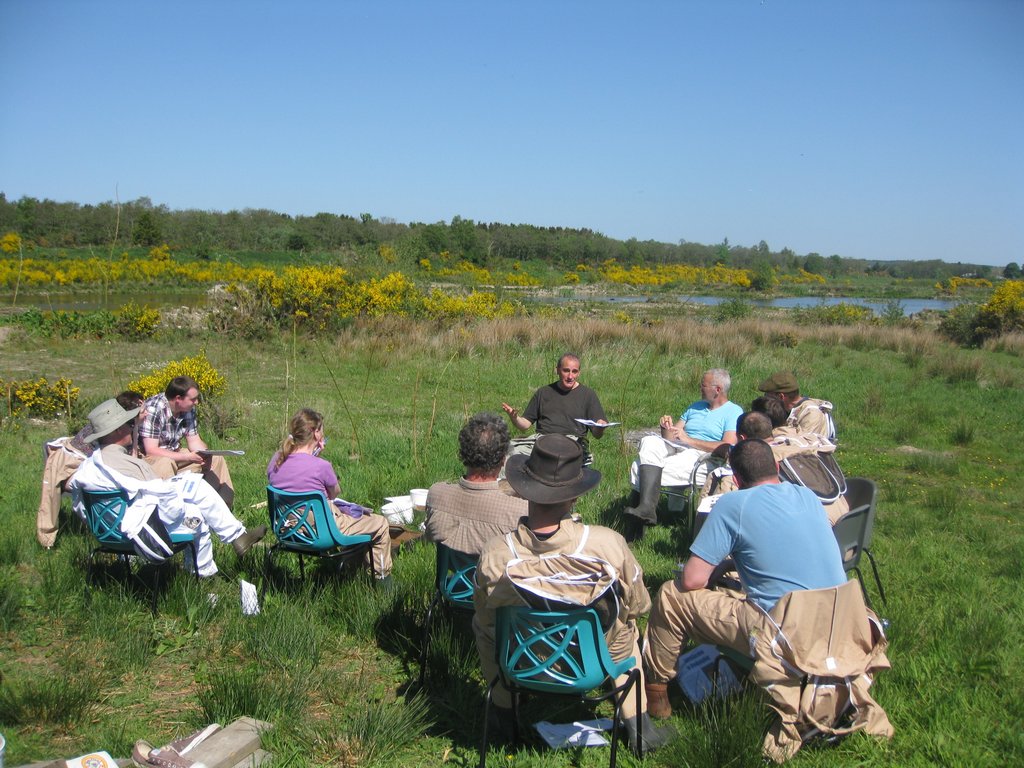
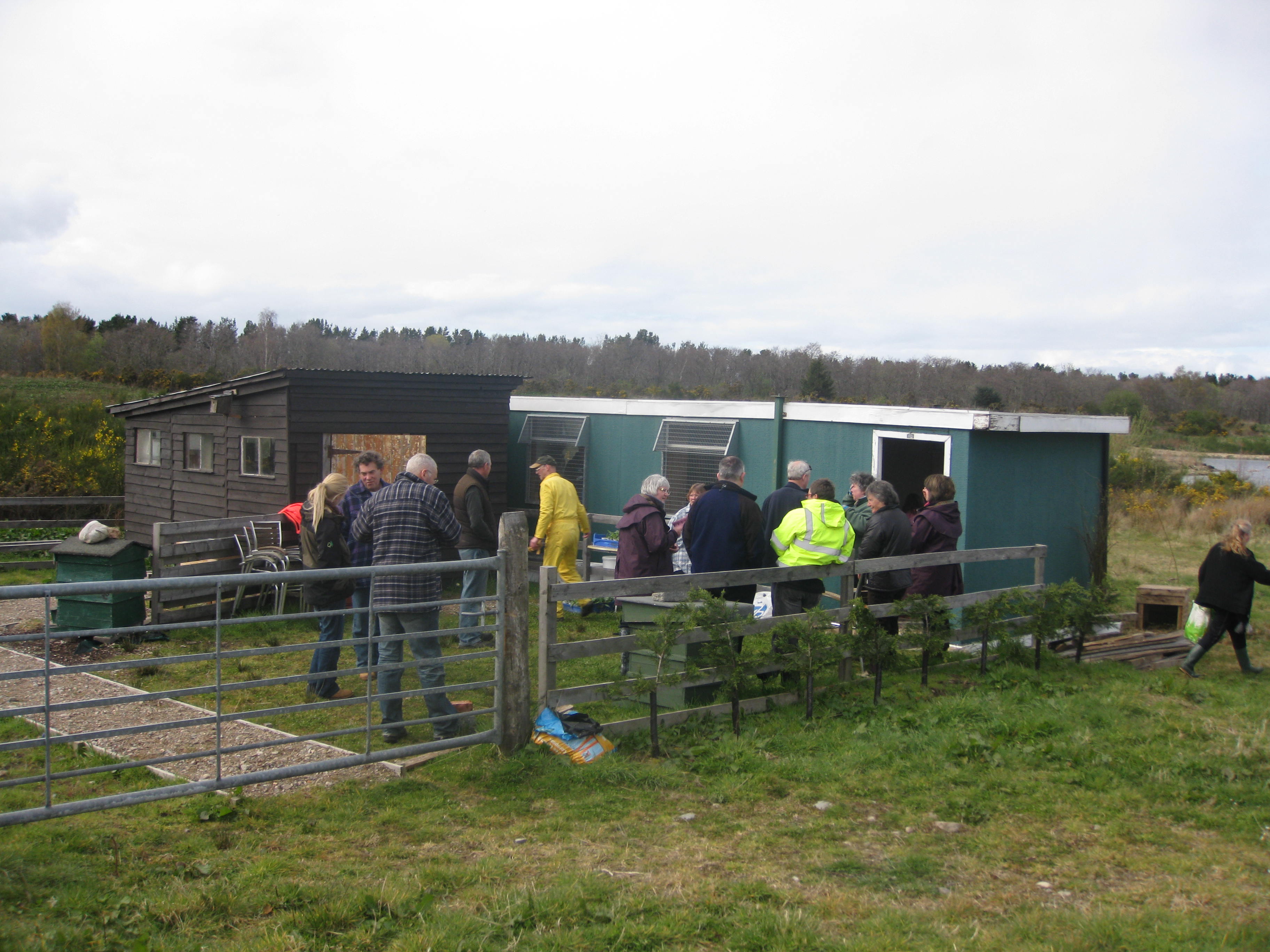
Off we set to arrive in good time only to find that the drizzle was even more determined to rain on our parade. Undeterred by the weather almost 40 beekeepers and prospective beekeepers appeared and it was the beginning of what turned out to be an excellent afternoon.

Beekeeping in the rain

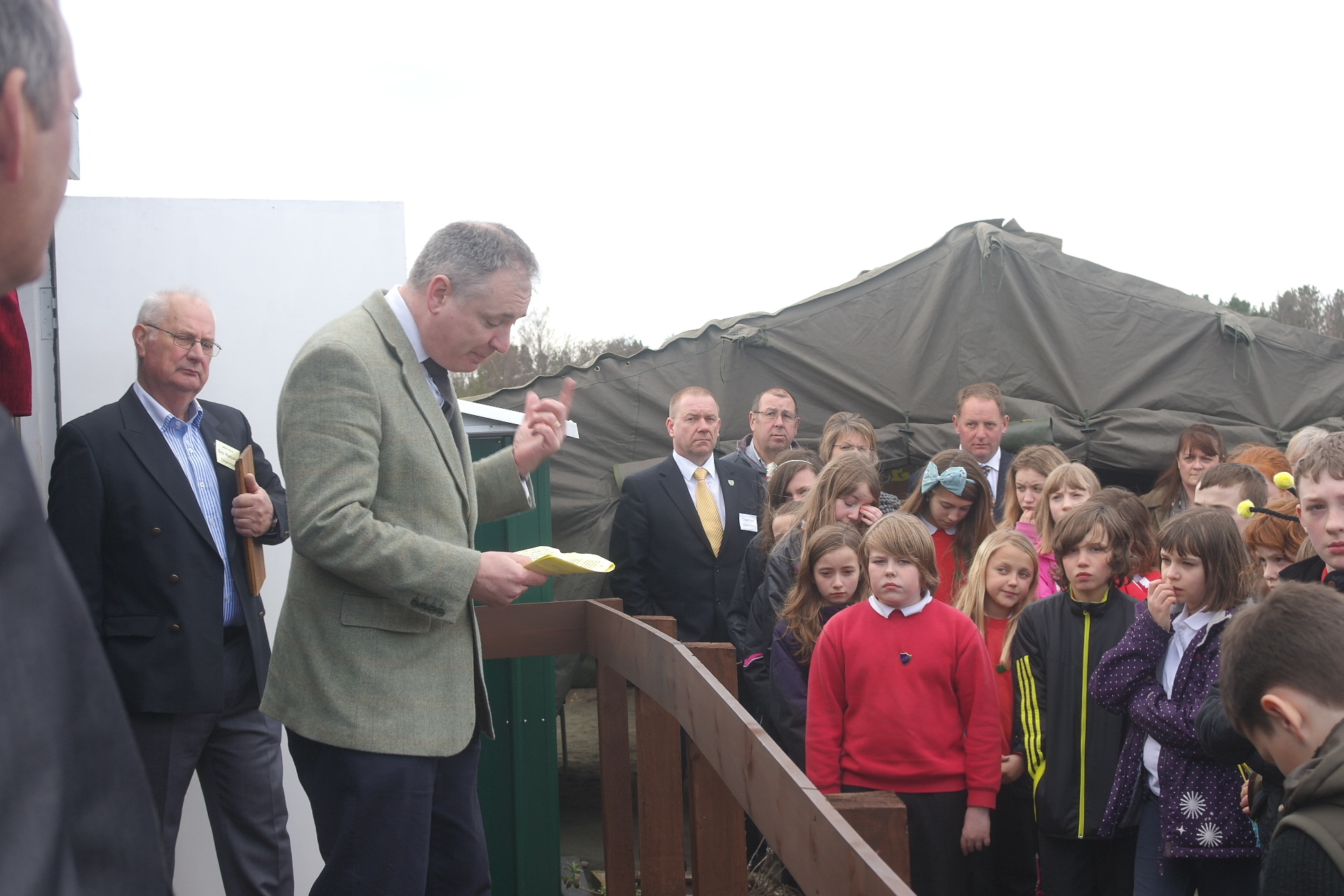
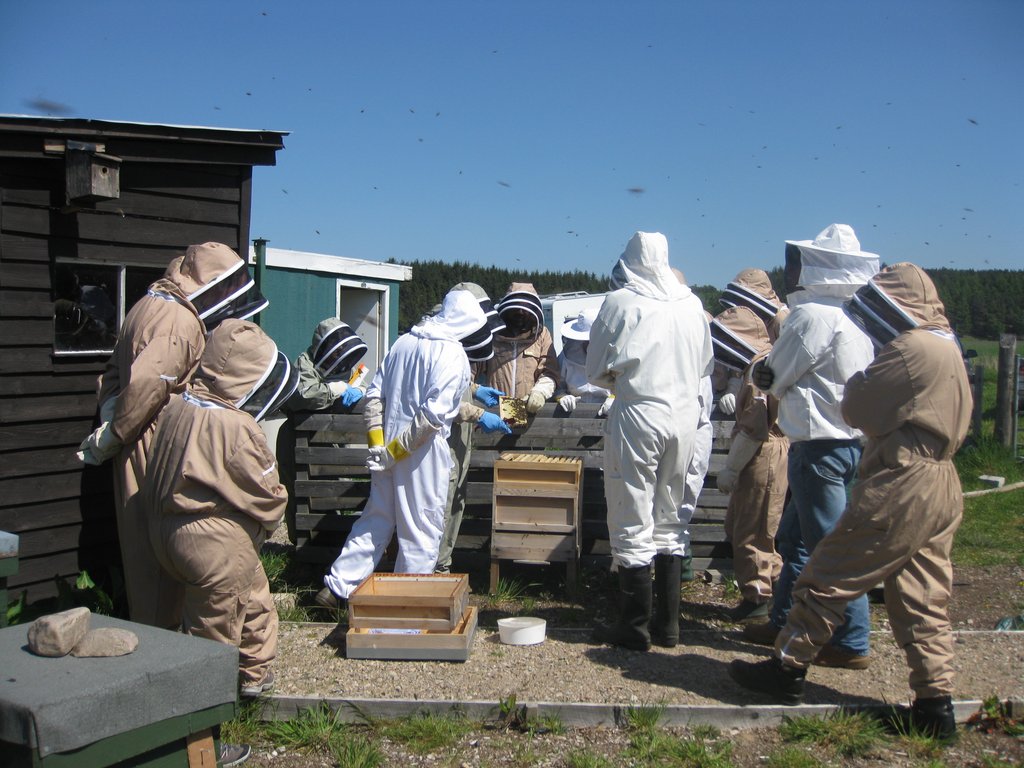
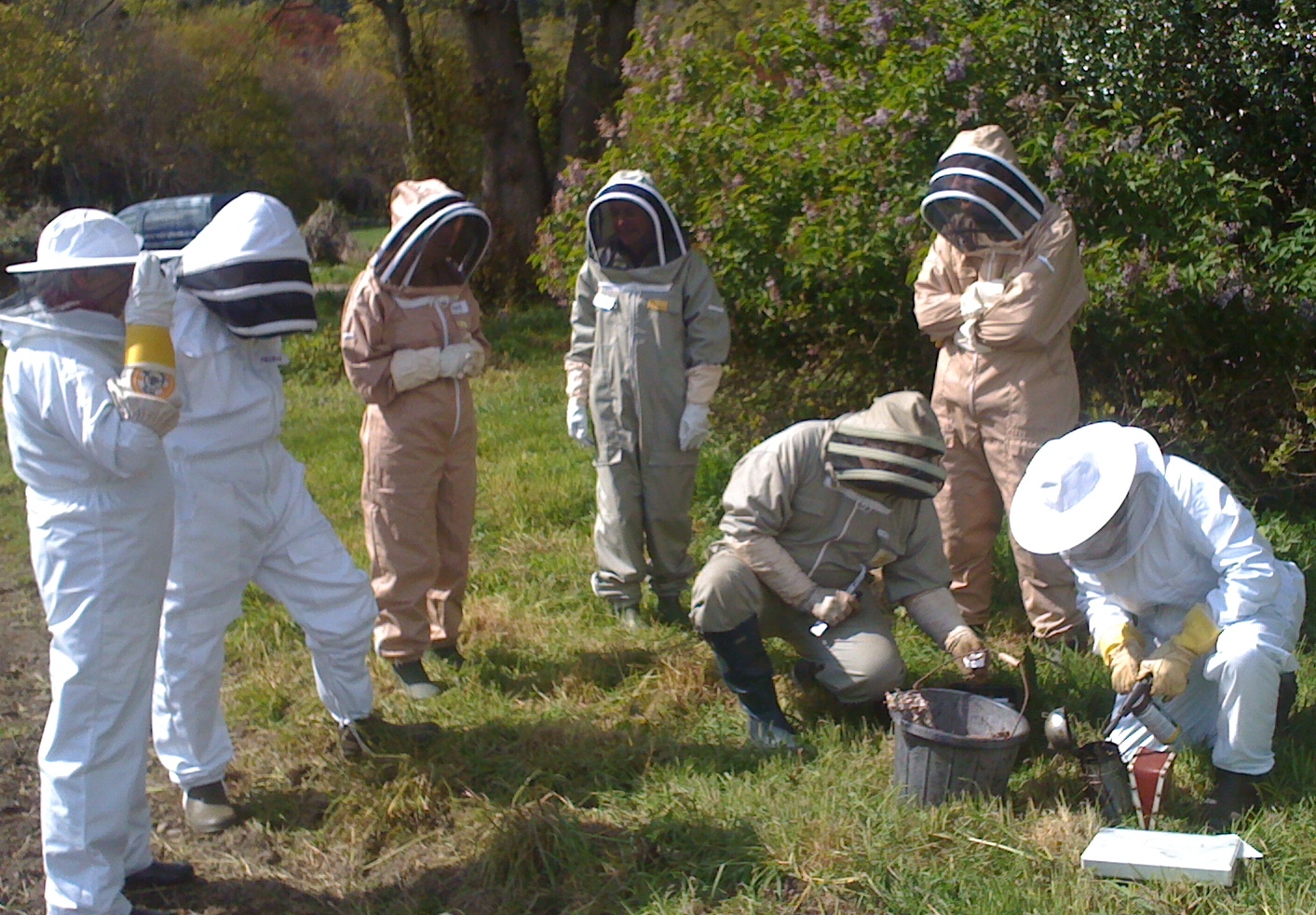
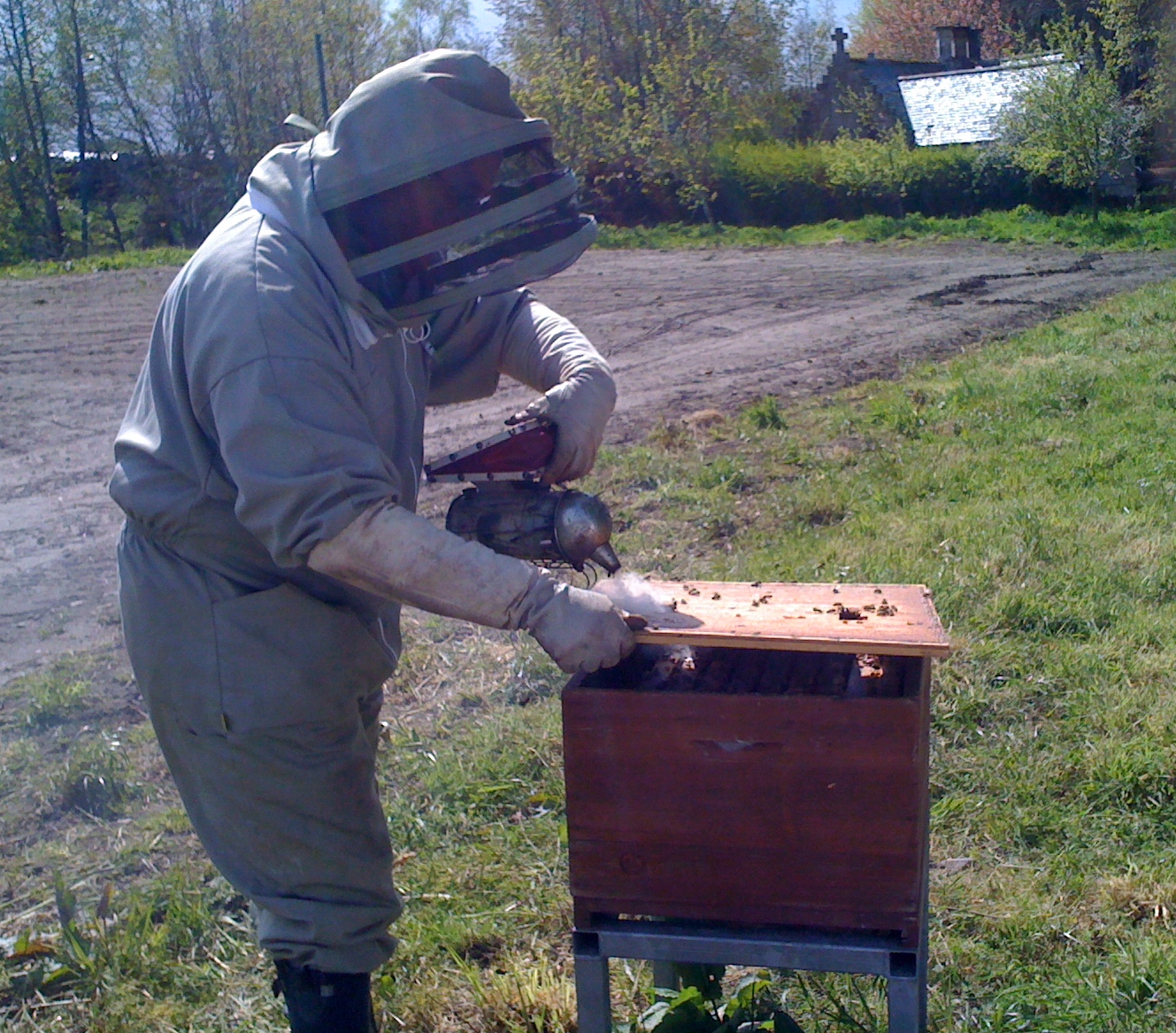
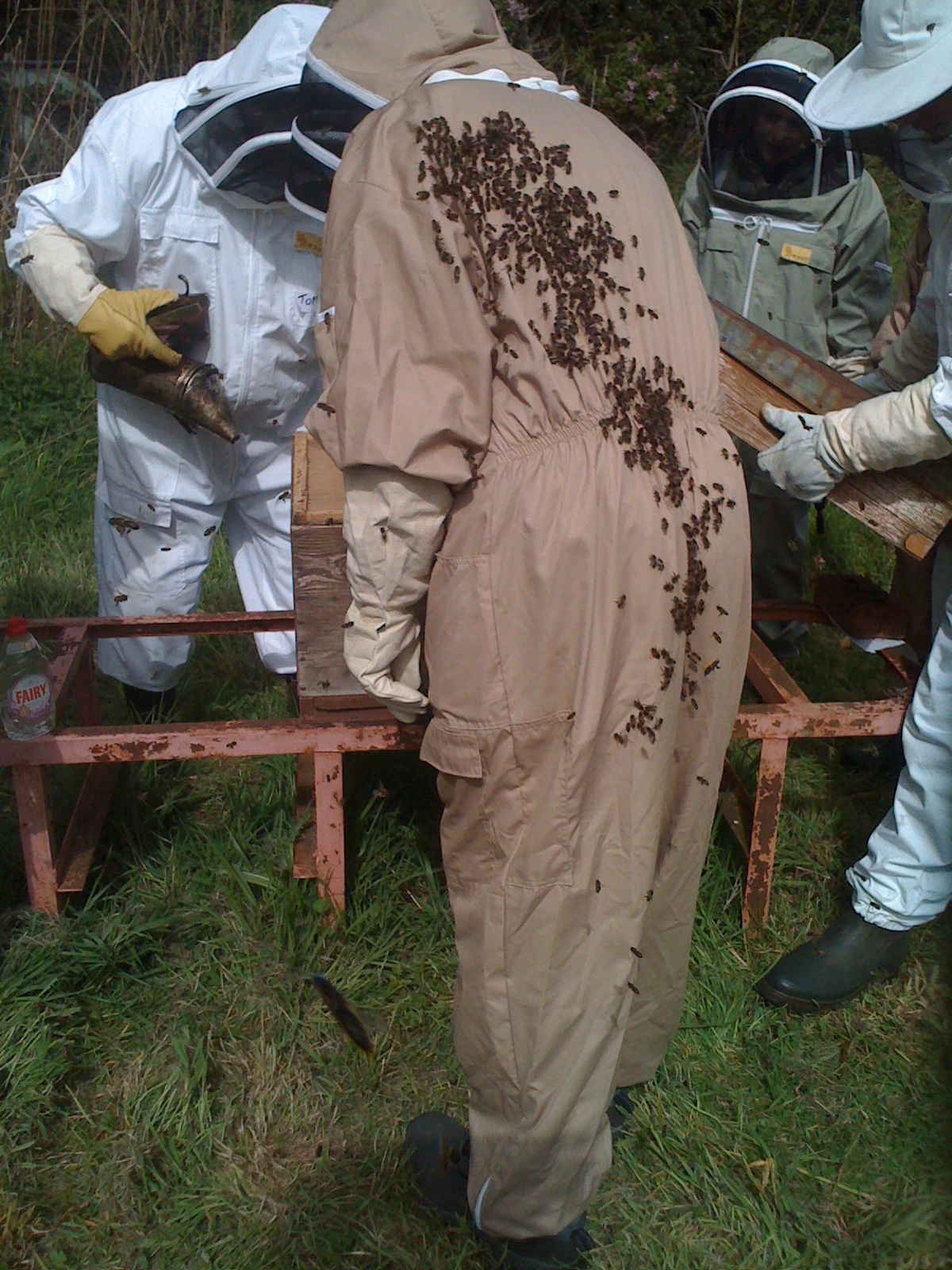
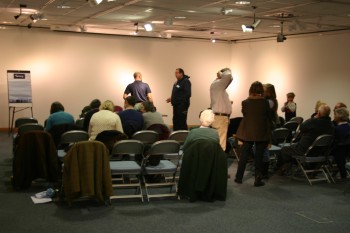
The meeting was greeted by Tony Harris, our secretary, and then followed a demonstration by Rob Mackenzie. It had become clear that we had a lot of new folks in our midst and so the plan was that they should be split into three groups with a view to their, at least, being able to see into a hive or two.

Fr Benedict

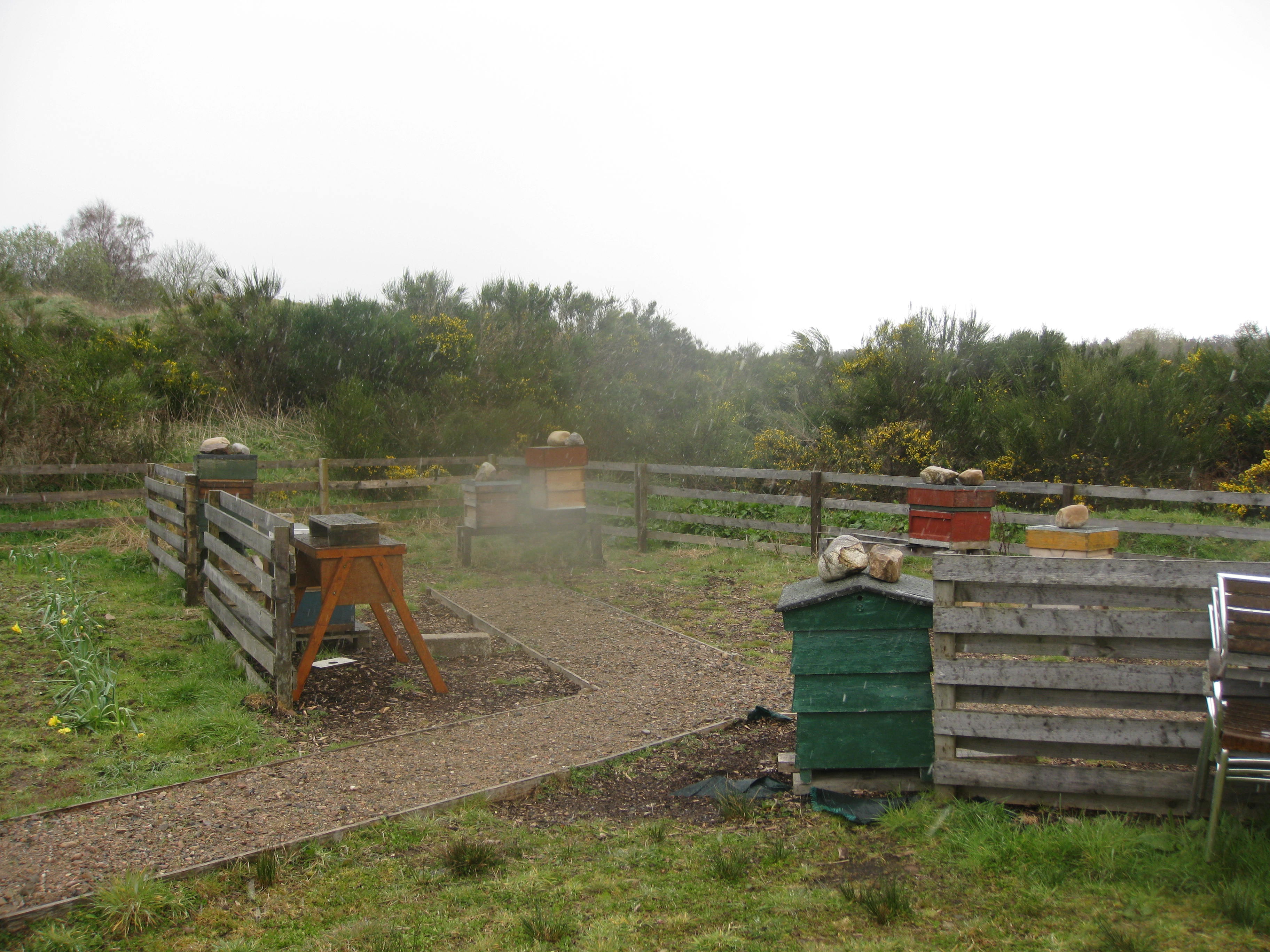
The groups were headed by Dr. Stephen Palmer, Tony Harris and Rob Mackenzie with two groups going to the new apiary at Pluscarden Abbey, St. Scholastica’s, to where some the hives have been moved and the other group going into the hives at the original site.

The prizewinners!
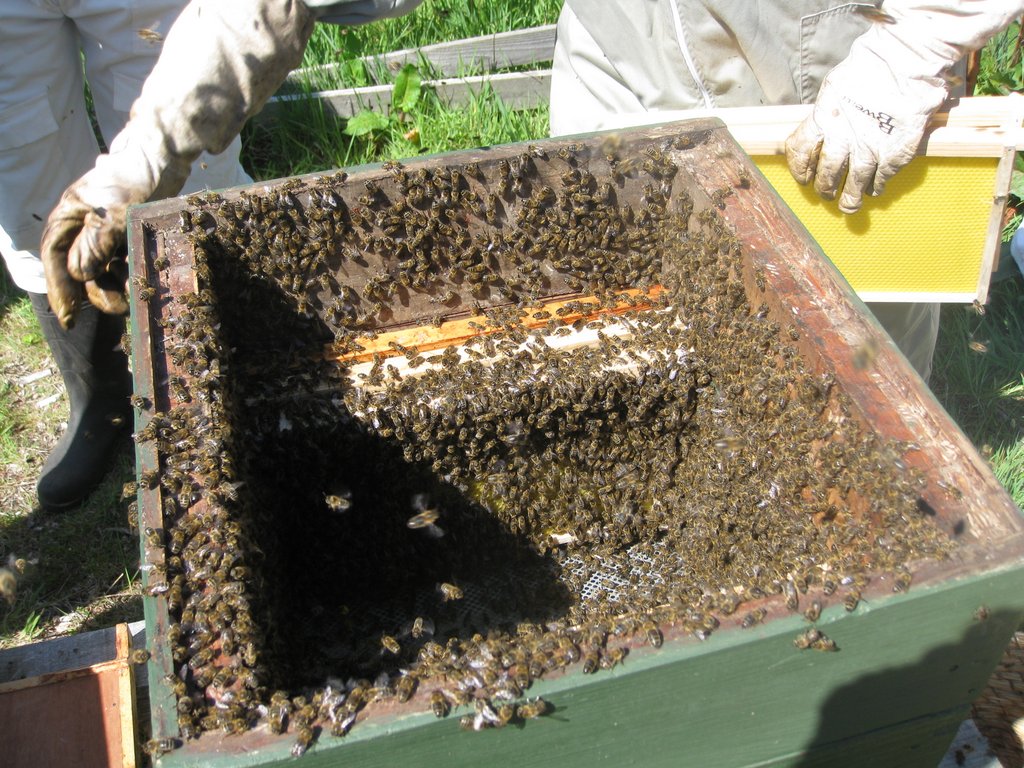
Those bees, at the old site, proved to be quite difficult and so the hives were closed quite quickly thus proving that it isn’t always a good idea to go into hives when the weather is inclement.

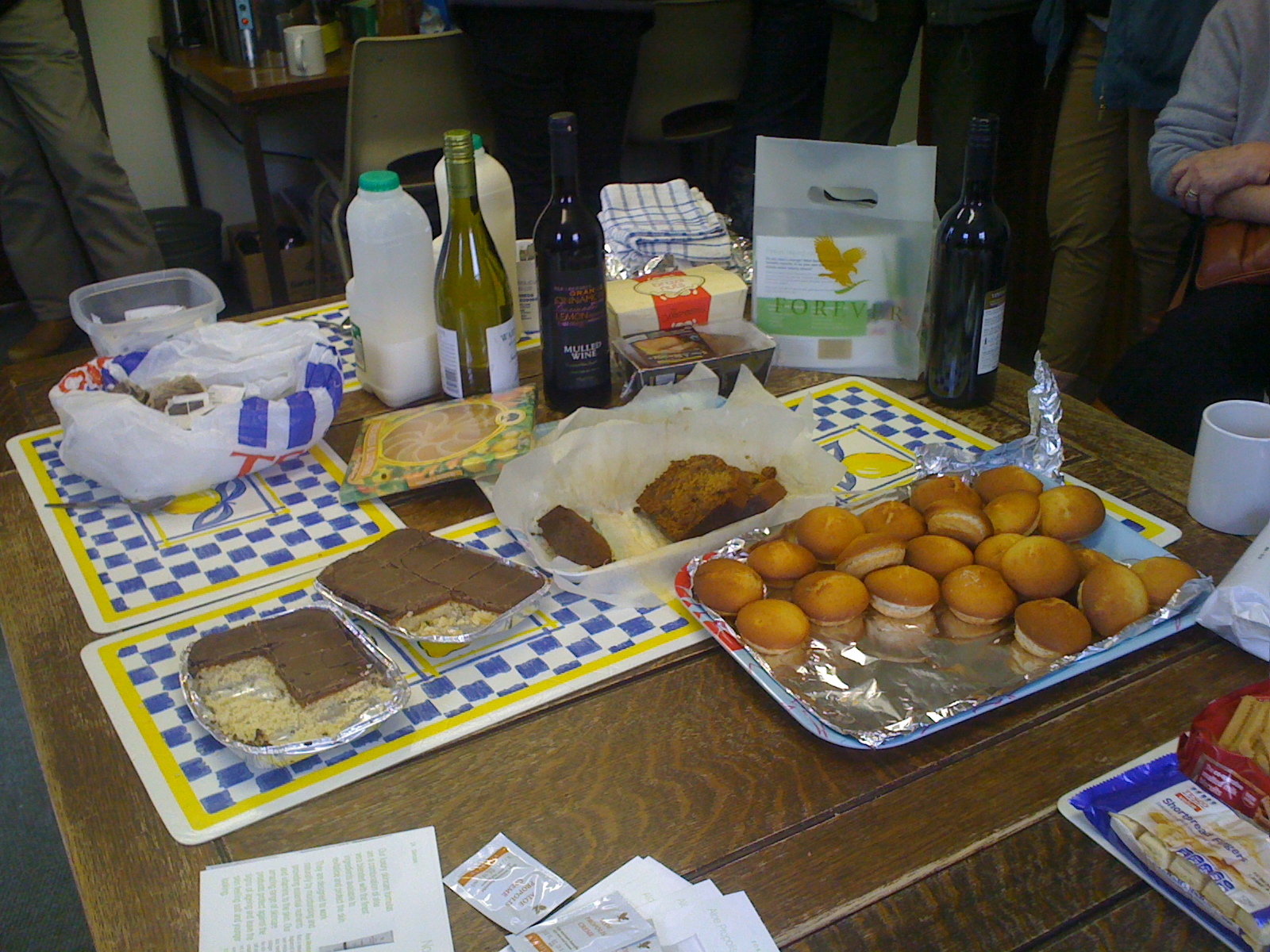
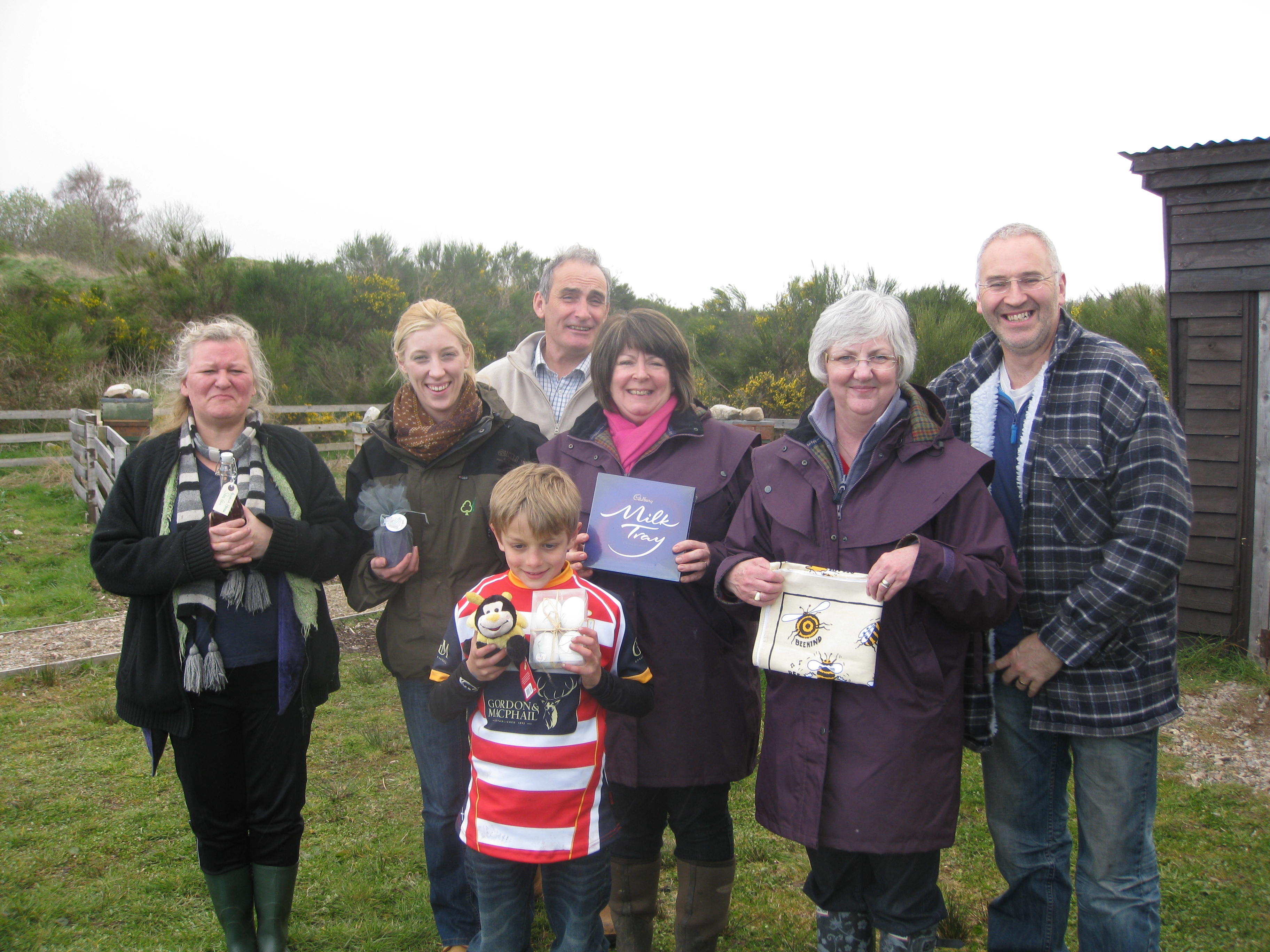
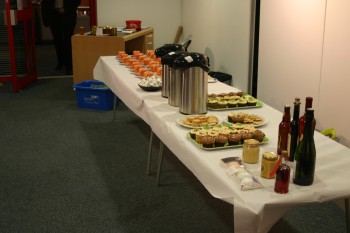
After the beekeeping business was finished with we all retired to the tea-room at the Abbey and a fine repast was had by all. The raffle, which was most ably organized by Angie Mackenzie was drawn and in all there were eleven prizes. We were joined by Father Benedict during the afternoon and also the Abbey cat – a jolly black and white person with a very short tail.


The Chairman's Crew!

It was excellent that we had so many new beekeepers with us and Tony did a fine trade in selling various new or second hand beekeeping ‘goodies’.

Moray Beekeepers Association is in fine fettle and thrilled that all the work that our Association has put into promoting beekeeping and awareness in our area is growing so well. So you see, every cloud does have a silver lining, especially yesterday at our favourite site at Pluscarden Abbey where the wonderful peace and tranquillity (except for a few rather grumpy bees!) was there for the taking.

Share

Queen Rearing – the Cook method part 4

A lineup of mininucs (plus Tony)!

Last Wednesday we carried out the last stage of the process – dividing the sealed queen cells up amongst mating nucs. We didn’t get as many pictures this time as everything got a bit hectic whilst we were filling the nucs and all hands were needed.

First we got all the mininucs ready for filling with bees.

What's the score?

Then it was into the hive to see how many of our larvae had finally been accepted and turned into sealed queen cells.

Aww - only six!

At this point we got a bit of a disappointment as it turned out that although the bees seemed initially to have accepted most of the grafted larvae they had only taken six to the sealed queen cell stage.  It was probably my dodgy first attempt at grafting but hopefully better results next time.

But there was a bonus in store for us when we went through the hive.  The bees had decided to build a few queen cells of their own. So, not to let their efforts go to waste, we harvested the extra cells and gave one each to its own mininuc.

Bonus queen cells!

And that was that.  We spent a chaotic hour piling bees into mininucs and left them closed up in the shed.  Tony went back to release them on Friday and all seemed well.  But by today (Sunday) two of the Kielers were empty of bees and their queens were dead in cell.

Fingers crossed we don’t get any more casualties!

Share

Queen rearing – the Cook method part 3

Today and yesterday saw the critical parts of our queen rearing procedure taking place.  Or to my mind the scariest parts.   For the morning session we had myself, Tony, John, Dianna and Ian in attendance.

The plan was to rearrange the colony to make the bottom brood box (full of young bees after last week’s manoevres) queenless and place the queen and the bees with her in the top box over a split board.  For those who don’t know a split board is basically another floor which separates the top storey of a double brood box hive and gives the upsatirs bees their own exit.

So before we swapped the position of the brood boxes over and introduced the split board we had to check the upper brood box for queen cells and destroy any found.  The bees in this box had moved up to accompany the brood but had been separated from the queen by queen excluder since last week.

The gap

As you can see we found some and I, in my wisdom and seeing how keen the bees were to build queen cells, was heard to utter the immortal phrase, “I think we’re on to a good thing with these bees”!  Needless to say Tony was to quote this back at me on a number of occasions as the day proceeded!

John hard at work

A gap was left in the bottom queenless box for the frame of grafted larvae to be put into in the afternoon.

Queen cell bars and grafting tool

After making sure the queen was in the top box we went our separate ways to return in about 3 hours for the grafting, by which time the bees in the bottom box would realise they were hopelessly queenless and eagerly accept our grafts (well that was the theory anyway!).

The chosen frame

Some of us were a bit more active than the others in the interval.  Above you can see John spending his time fixing our leaky roof and getting stung on the cheek for good measure!

In the afternoon we all returned and were joined by Arlene from our last introduction to beekeeping course.  Now it was time for the part of the process I was most worried about – the grafting.  I had made some wax queen cups and waxed them on to a modified frame with two bars to hold them.  And now it was time to take the plunge.  I had been really keen to try grafting but now I wasn’t so sure.

Grafts carried home in a nuc

Given the weather was typically Scottish and it had in fact been hail-stoning about an hour before we had to resort to grafting in the front seat of Tony’s car – far from ideal!

Vince Cook advises that it’s much easier to graft from larvae in relatively freshly drawn comb but the best candidate from the combs of unsealed brood we had was a fair bit darker than I’d have liked.

My plan was to cut down the row of cells below the larvae I wanted to graft to allow easier access.  But the old comb was harder to cut and didn’t break or fold cleanly.

Making the best of it I ploughed on.  I’d like to say that grafting was easy and the larvae all lifted cleanly and slid off gently into their new cells.  Well the ones I successfully lifted were very gently treated but I’m sorry to say there were a good few that I rolled or otherwise damaged and had to be discarded.  After what felt like an age I had all the cells filled with the smallest larvae I could find and off the comb went back to the cell raising colony protected from the wind by a nuc.

I must say I wasn’t at all hopeful of the success of the grafts and worried about them for the following 24 hours.  I was certain we’d have to go through the whole process again or that we’d only get 3 or 4 larvae accepted by the bees.

Well back we came again today to see what the score was and……..

Success

We didn’t brush the bees off to check the acceptance rate in detail but pretty much the whole of the top bar of grafts had been accepted and it was much the same on the bottom bar.  To say we were pleased is a big understatement!

We’ll be back again in just over a week to make up nucs/mininucs and give each a sealed queen cell.  Then all we have to worry about is them mating properly – but the finish line is in sight!


Share

Queen rearing – the Cook method part 2

A couple of weeks ago I mentioned that we were about to embark at long last on a foray into rearing our own queens.  Unfortunately the superb weather of April has been replaced by a somewhat more familiar icy blast and we had to delay our plans.  However this week it was decided that if we didn’t start now we never would and so today, armed with “Queen Rearing Simplified” we started on the great adventure.

Spot the Queen!

In attendance were John and Dianna Baillie, El Supremo himself  Tony Harris and yours truly.  We have Dianna to thank for the photographic record of events.

Charged queen cell

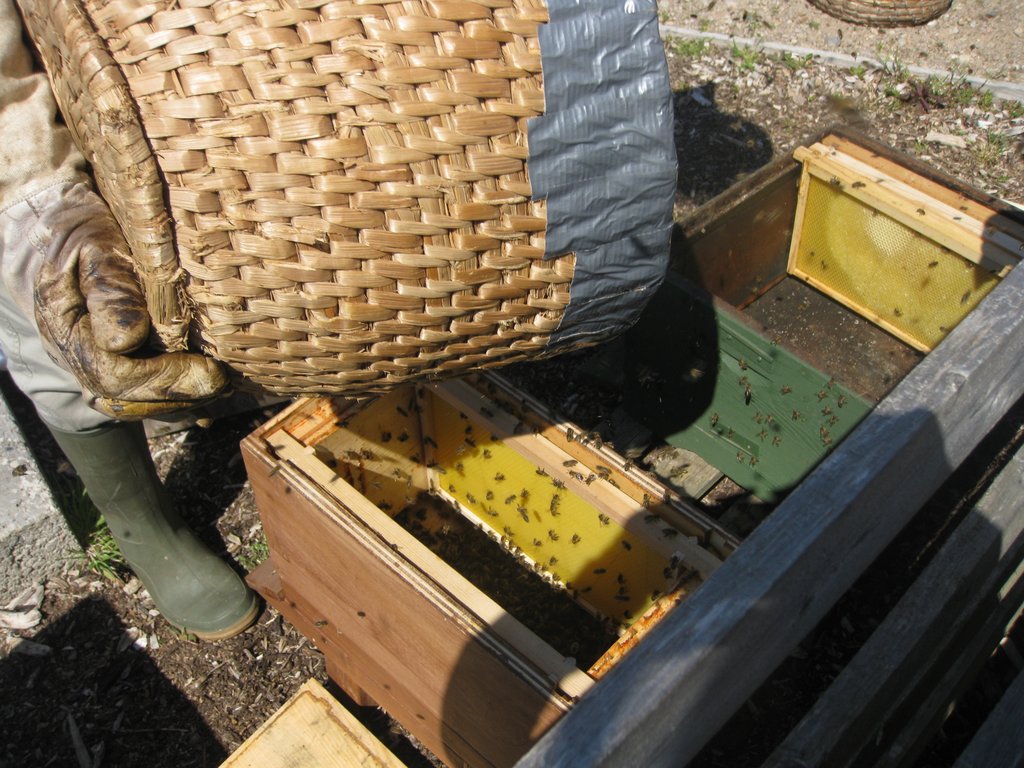
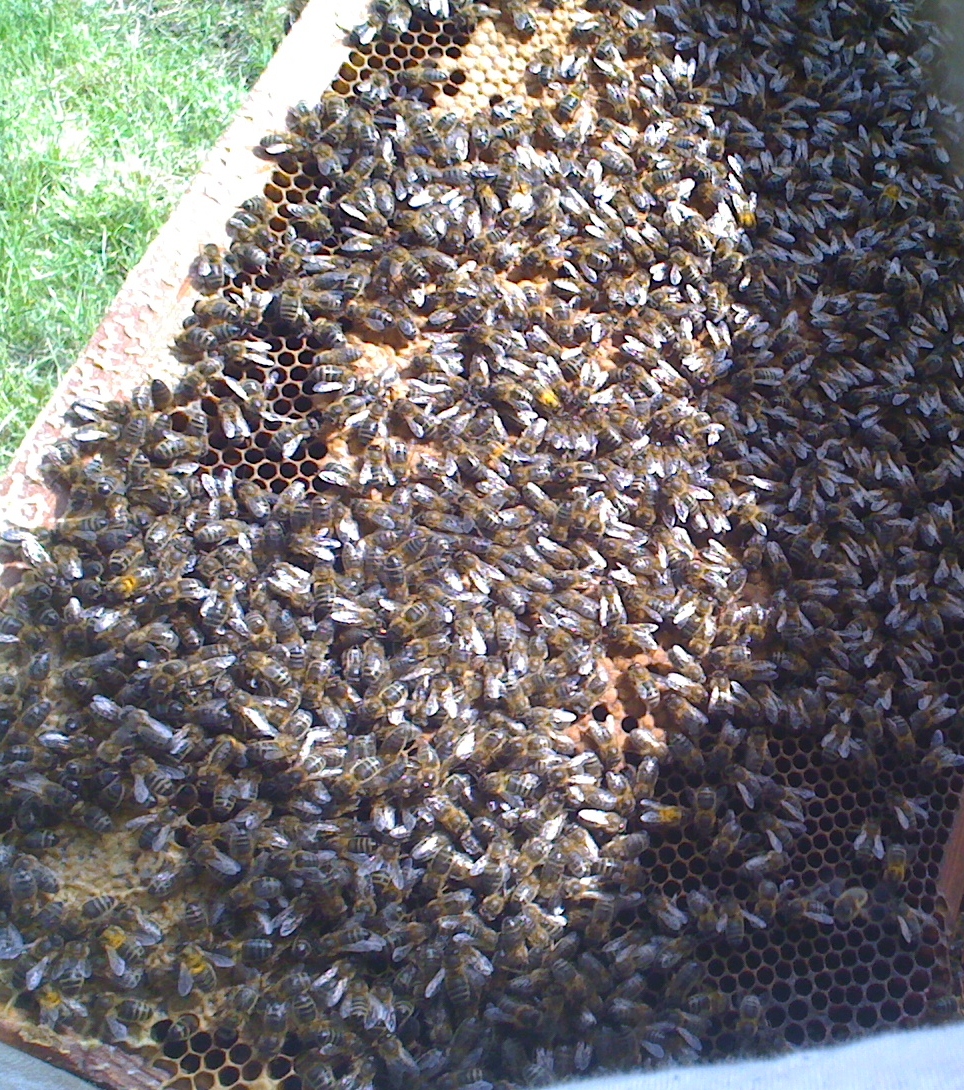
Today was stage one of the process and the first part of that was to find the queen from our chosen cell starter colony and confine her in a bottom brood box away from most of her brood.  The theory being that the brood hatches and all of those young bees are in prime condition, when we make them queenless, to feed our grafted larvae when we carry out stage two of the process in eight days time.  Well found her we did and into the queen clip she went.  Then we set about rearranging the colony.   A couple of charged queen cells were found and the decision was made to make up a couple of nucs using the queen cells and the excess brood from the top box of this double brood box colony.  John had very generously made and donated  some very beautifully crafted nuc boxes and a couple of these were pressed into service.

Brood for a nuc

Nucs made up, entrances blocked


Queenless queen clip!

This is where the fun started.  Unknown to us Tony’s queen clip was bust and on lifting the manipulation cloth under which the clip had been placed her majesty was nowhere to be seen!  By which time the normally even tempered bees were quite understandably getting a bit concerned at the tearing apart and rearrangement of their home.

John in a cloud of bees!

There was nothing for it though and back through the box we had to go. Luckily we found her in reasonably short order and put her into the brood box where she’ll be staying for the next couple of weeks.

Releasing the queen

A gallon of feed to keep them happy!

Well that was pretty much it.  We reassembled the hive and off into the sunset we went.  Until next week when I make my first attempt at grafting larvae.  Stay tuned!


Share

Mayfayre 2011

On Saturday last Allison Laws and Viv Hill went to the ‘Mayfayre’ to represent Moray Beekeepers at the Steiner School.  It was an extremely blustery day with several of the tents blowing over – many tent pegs used thereafter!  The Steiner school is privately owned and their MayFayre represented the school’s enjoyment of the Spring and early Summer.  Our display was well received  and I can clearly say that all who visited it were both interested in and very aware of the pastime of beekeeping and the problems which beekeepers are dealing with at the moment.

The children very much enjoyed our bees and pollen game and the adults were pleased to be given all the information about our association.  Our youngest beekeeper Casper who attends the Steiner school and his father Michael were very much involved, especially Casper who may-pole danced, organised the raffle and was generally VERY busy.

Whilst Alison and I were kept very busy with questions answers and the huge interest shown about the contents of a nucleus hive, especially the weight of a fully filled and capped frame of honey compared with one which only had foundation in it, we were also greatly entertained by may-pole dancing, folk on stilts, lots of singing and dancing and general jollity by all.  It was a good day.

Share

An Elgin Swarm – again!

The Weather in Elgin, this morning, is +16C and blowing a hooley from the north-west with intermittent blustery showers too.

Graham went to our apiary to walk the dogs with a view to my meeting him there at 10.30 to remove the nucleus bees (from yesterday) into a brood box.  Arriving on time there was no Graham to be seen so I donned my ‘outfit’ and walked towards the hives to note that G. was in the middle of a swarm and busily trying to make some sense out of it. The wind was not helping and many of the bees had taken cover on the south and east side of fence posts in front of their hive.

A nucleus box was ready and already had some of the bees in it but the rest were playing hide and seek around the said post.

When we had eventually put the majority of bees in the box and there was not too many left I happened to see ‘her majesty’ running around the post and I swear she had her thumb to her nose – looking straight at me!!  We caught her and, somewhat unceremoniously stuffed her into the nucleus box after which we had the pleasure of watching bees doing a Noah’s Ark impression.  Thank goodness.  You will note that I haven’t used the word ‘cavalier’ today – getting to be a bit ‘old hat’!

For those who read the blog and can count we now have nine colonies. AND………..no more equipment. Help!

Share

An Elgin Swarm

Having come through the winter successfully with our 4 colonies, guess what – we are now 8!!

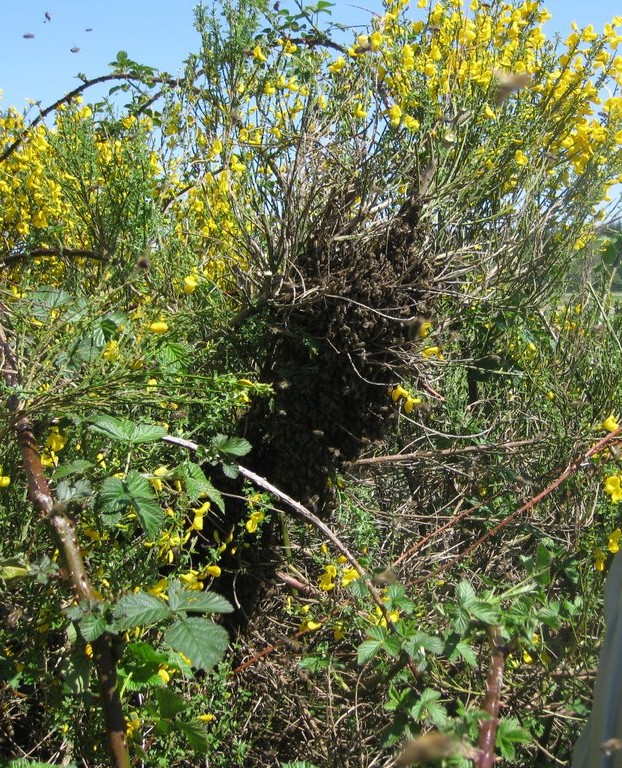
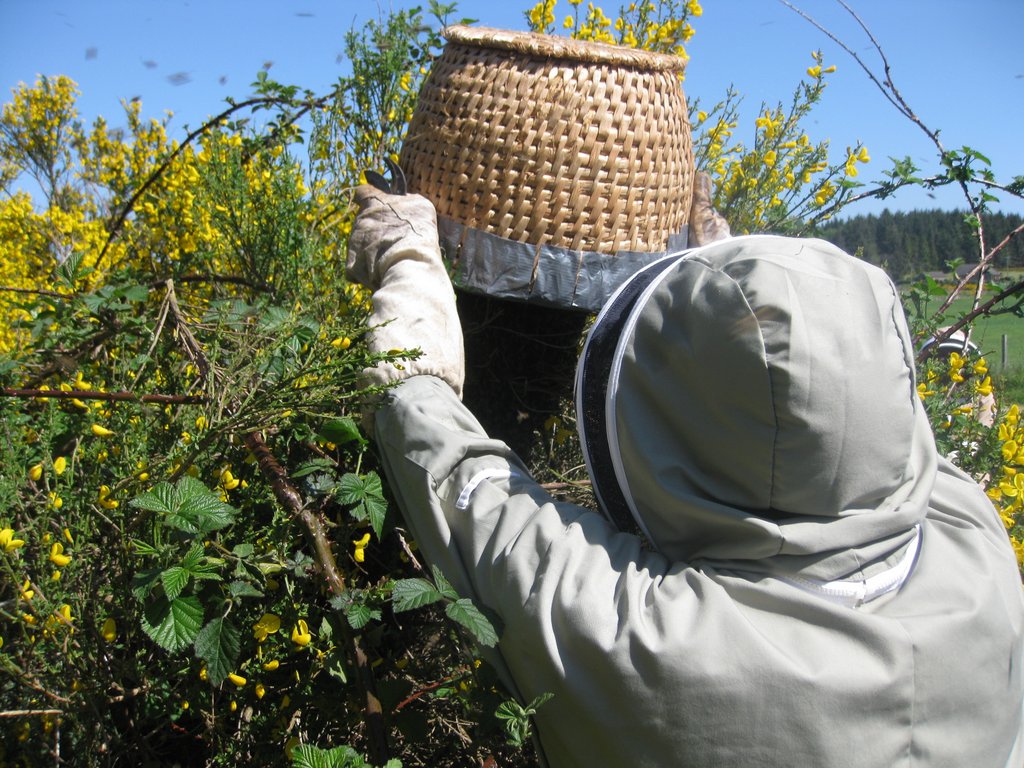
The hive, in the middle of Elgin, which had swarmed two weeks ago now has again.  After our experience last year we have been super vigilant re signs of swarming but, quite clearly, not vigilant enough. Anyway, we collected the swarm but none of this ‘shake the cluster into your skep and hey presto stuff’ – no the swarm was spread along 5 metres of privet hedge, in the next road to ours. I remembered the word ‘cavalier’ from last year and quickly discovered that if I ‘patted’ the bees which weren’t in the main cluster away from their ‘outpost’ they gravitated towards the main ‘clump’.

They are now safe at home, in a nucleus box, and it is full to busting.

Clearly our site which is in the middle of lots of ‘gardener’s gardens’ is doing incredibley well. Perhaps I will use it as a position where I can strengthen weak colonies. Do I need to say that any thoughts on this would be VERY welcome?

Share

MBA monthly meeting May 2011

Alasdair Joyce’s Apiary at Dallas Dhu 15th May

After a morning of poor weather more than 40 people arrived at Alasdair and Mary’s delightful home and garden to find that the weather was kind and the rainy drizzle had stopped.

The bees are situated about 100 yards away from his house through a woodland garden and over a bridge across his burn. Three hives were inspected and discussed during which time many questions were asked and answered covering the whole range of beekeeping ability and all were thrilled with the session. Indeed, I think it safe to say that everyone learned something from Alasdair’s vast knowledge and practical experience.

Afterwards Mary put on an excellent spread for tea-time and the raffle was drawn for five prizes.

The above does not adequately describe the fun and laughter we had not to mention the discussions that went on throughout. The only disappointing thing was that later we could not go for a ‘wee dram’ at the distillery where we parked our cars – I suppose we can’t have everything can we?

The MBA committee and membership attending offer many thanks to Mary and Alasdair for a marvellous afternoon.

Share

High Jinks in Lhanbryde

For the second time in almost as many weeks it has been necessary to drive – ‘lickety spit’ – to Donna and Ronnie Clark’s home in Lhanbryde.

Why? Her bees are swarming!!

Donna, who is the Treasurer of Moray Beekeepers Association has to go to work to keep her bees in the manner to which they are accustomed and Ronnie, who works off-shore, keeps an eye on ‘the girls’ when he is at home. Ronnie being a novice beekeeper – but keen – is not quite confident – yet! – to deal with swarms and so Graham and Viv Hill are his first port of call when he needs another pairs of hands.

The clever thing about all this is that Donna’s bees always manage to swarm to within a few feet of the hive and so the three of us, armed with ‘loppers’ and a skep, collect them up and – hey presto – Donna now has three colonies. Lucky girl.

With so many folk losing colonies this past winter or two she has the great fortune to be queen-right in all three!

Share

Queen Rearing – The Cook Method

We’ve been planning to embark on a queen rearing programme here at MBA for some time now and this weekend, at last, we’re going to start in earnest! The method we are going to use is good for small scale queen rearing but can be adapted for greater numbers. It’s called the Cook Method and was devised by a clever chap called Vince Cook and described in this book.

We have a small group set up to help with and observe the process and we’re all very keen to see it succeed and to develop into something significant for Moray’s beekeepers as the years progress.

I’ll be reporting on how we get on here so watch this space!

Share

Older posts «

» Newer posts